Great Design Never Starts With Design
Great Design Never Starts With Design
Most people think the architecture process starts with a floor plan. They imagine sitting down with an architect, sketching rooms, choosing styles, and watching a home or building take shape on paper.
That is a natural assumption. It is also how most projects get into trouble.
The truth is, great design never starts with design. It starts with understanding, and there is a significant difference between the two.
The Rush to the Blueprint
We see it often. A client arrives excited, ideas already forming, inspiration photos saved, a rough square footage in mind. The instinct is to get moving — to start drawing, to see something take shape on the page.
But if we jump straight to the plans, we are designing in the dark. We are making decisions about form before we have established purpose. We are answering questions the project has not asked yet.
The result? A building that looks right but does not feel right. A home that has everything on the list but somehow misses what mattered most. Change orders during construction. Cost overruns. Regret.
What We Actually Need to Know First
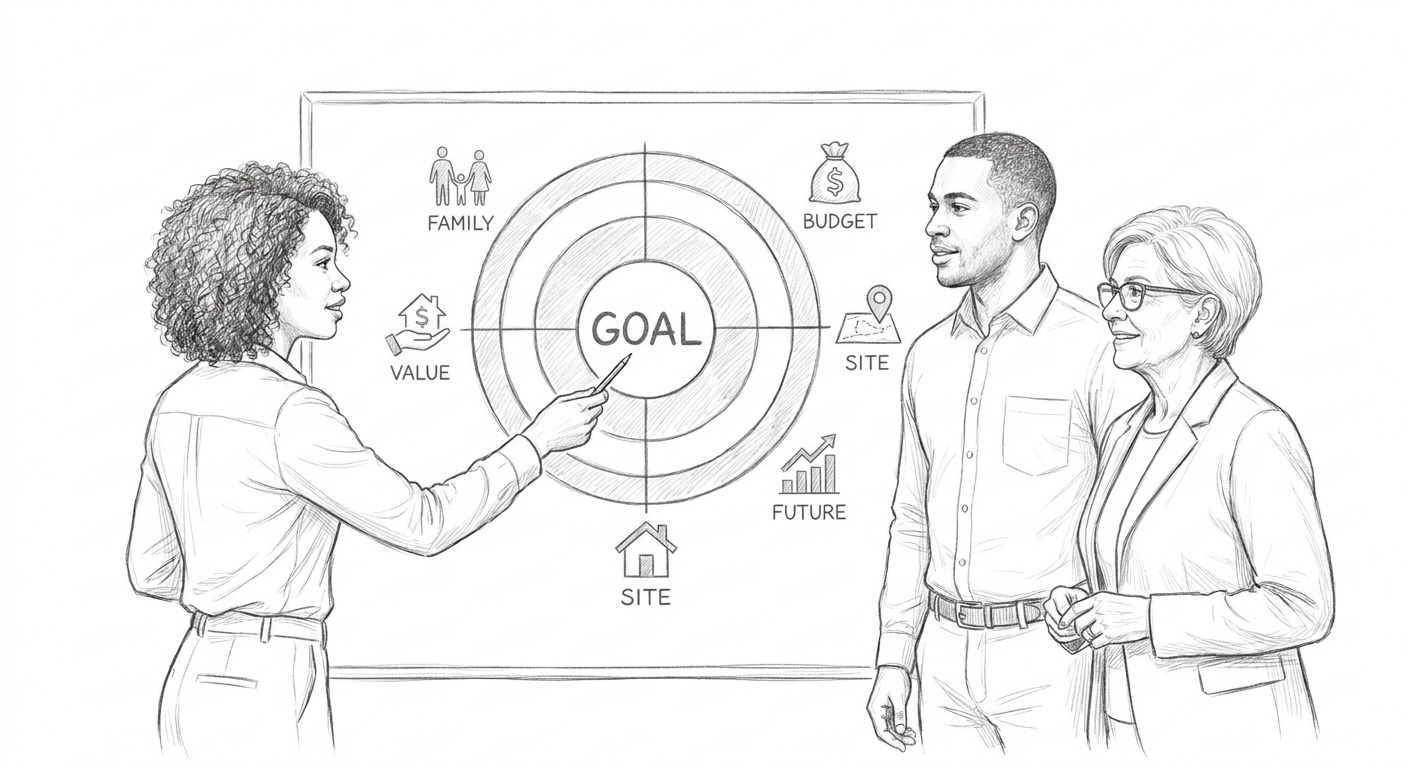
Before we draw a single line, we need to understand the real story behind the project.
That means going deeper than rooms, style, and square footage. Those three things represent roughly 75% of what a design brief typically captures. But the other 25% — the part most projects never find — is where the real work begins.
We call that missing piece the X-Factor.
The X-Factor is the deeper why behind the build. It is the reason you are doing this in the first place, beyond the obvious functional goals. It is how you live, how you gather, how you work, and what you want this space to say and do long after the project is finished. It is the personal, emotional, and often unspoken motivation that makes design decisions suddenly obvious — and makes the final result deeply meaningful rather than merely competent.
Finding it is not an accident. It requires asking the right questions, listening carefully, and sitting with the answers before picking up a pencil.
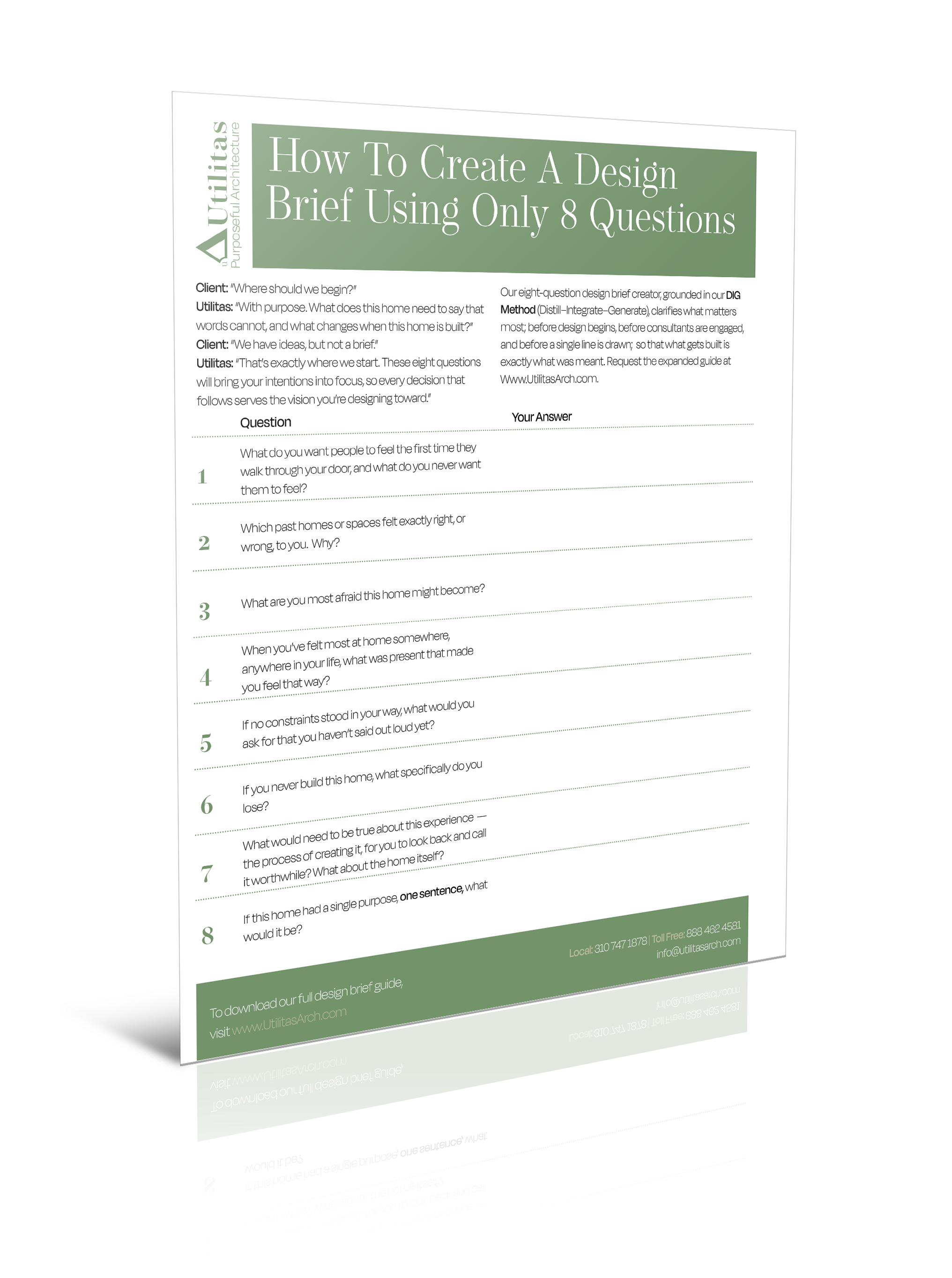
That is the foundation of what we call the DIG Method — our front-end discovery process that uncovers the full picture before design begins. Purpose first. Always.
Purpose Before Form
We believe every great building rests on three pillars: Purposeful. Durable. Beautiful.
These are not competing priorities. They are complementary, which Vitruvius knew this over two-thousand years ago. But purpose has to come first. It becomes the lens through which every subsequent decision gets made — from the placement of a window to the routing of a plumbing line.
When purpose is clear, design follows naturally. When it is not, design becomes guesswork dressed up as creativity.
Constraints Are Not Obstacles. They Are Information.
Early discovery is also where we do the hard thinking about constraint. We do it deliberately, with real construction experience behind every conversation.
Utilitas Architecture's founder has not only designed buildings across more than twenty-three years of professional practice. He has personally built his own homes. That matters. When we evaluate your project early, we are thinking about more than aesthetics. We are thinking about constructability, standard material dimensions, utility routing, sequencing, and the true cost implications of decisions made on paper, before those decisions become expensive problems in the field.
In Southern California, that early analysis has to account for more than the standard set of questions. Depending on your project, it may mean navigating complex permitting requirements across Los Angeles, Ventura, or Santa Barbara counties. It may mean analyzing like-for-like area options for a fire rebuild. It may mean integrating defensible space and fire-hardening techniques into the design from day one. For commercial clients, it may mean designing around strict tenant improvement schedules where every week of delay has a real cost.
Understanding these constraints early, before the design is locked in; is how we protect your budget, reduce field errors, and ensure your project can actually be built the way it was intended.
Your Trusted Advisor from Day One
There is one more reason early strategic engagement matters: who you are working with when you make those first decisions.
At Utilitas, our design fees are not tied to ballooning construction costs. That means our advice is never shaped by what would make the project more expensive. We are not incentivized to push you toward bigger, costlier solutions. Our only incentive is to get the project right — for you.
As a Registered Architect, Scott is legally and ethically bound to act in your best interest. That is the foundation of the Owner's Trusted Advisor relationship. And it begins not when construction starts, or even when design begins, but in the very first conversation — when we are still asking questions and listening carefully for the answers.
That is where clarity starts. That is where good projects are built.
Design Deserves a Better Starting Point
The best projects we work on are not the ones with the biggest budgets or the most dramatic sites. They are the ones where we took enough time at the beginning to truly understand not just what we were building, but also why.
When you know the why, everything else gets clearer. Design decisions become more obvious. Trade-offs become less stressful. The final result becomes more than a building. It becomes something that genuinely reflects its purpose and earns its place in your life.
We start with why. Purpose changes everything.
If you are beginning to think about your project — whether it is a custom home, a fire rebuild, or a commercial space — we would love to have that first conversation.
It will not start with a floor plan. It will start with the right questions.