The Cheapest Architect Rarely Delivers the Cheapest Project
The Cheapest Architect Rarely Delivers the Cheapest Project
When you're planning a custom home, a major remodel, or a significant addition, the initial architect's fee is one of the first numbers you'll compare. It's visible, it's concrete. And it feels like a straightforward way to control costs. But choosing your architect based on the lowest fee is one of the most expensive decisions a homeowner can make.
The fee is only the beginning. What matters far more is what you get for that fee, and what it costs you later when critical thinking, thorough documentation, and genuine advocacy are missing from the process.
Design Is Not Just Drawing Rooms
Most low-fee architectural proposals are built around a simple brief: rooms, style, and square footage. And while those elements matter, we believe they represent only about 75% of what a project actually needs to succeed.
The other 25% is harder to see on paper, but it's where the most important decisions live. It's the deeper "why" behind your project. It's the way your family actually lives, the legacy you want this home to carry, and the habits and rhythms that need to be built into every room, every hallway, every decision. We call this the X-Factor. Uncovering it is the foundation of everything we do at Utilitas.
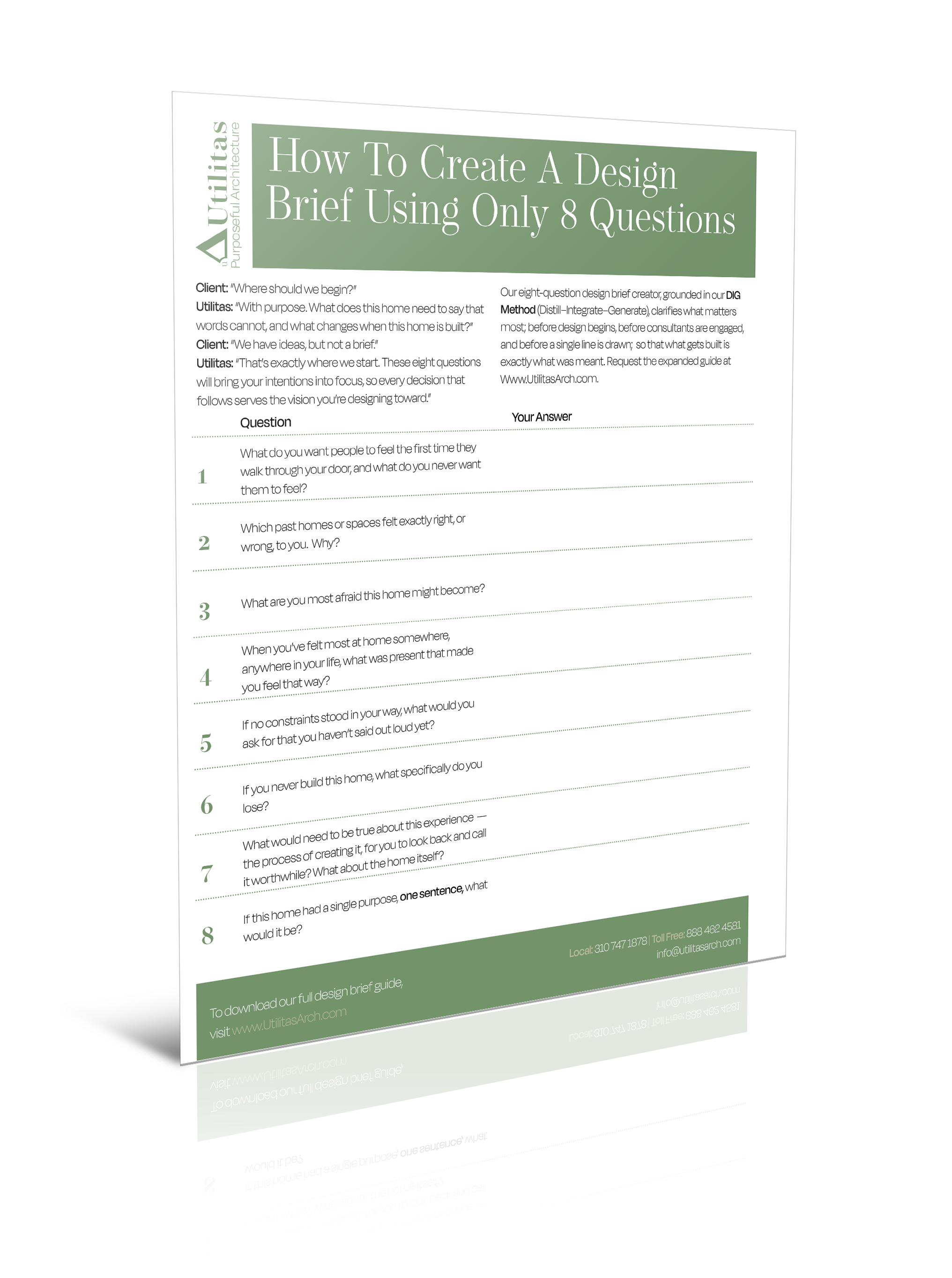
We developed the DIG Method specifically to surface that missing 25%. Before a single line is drawn, we dig beneath the surface-level wants to find the real purpose driving your project. We ask not just what you want, but why you want it, and how you intend to live in the result.
When that deeper purpose is missing from the design process, the project drifts. Scope creeps. Design decisions get made by default rather than with intent. You end up with a home that looks fine on paper but doesn't quite fit the life you were trying to build. And course-correcting during construction is not just inconvenient. It's expensive.
Cheap Drawings Create Expensive Problems
Low-fee architects often produce low-investment drawings. That's not a criticism of character. It's a consequence of economics. When the fee is cut, something has to give, and it's usually the depth of documentation or the level of attention.
Rushed or incomplete drawings leave the contractor guessing. Every unanswered question in the field becomes a decision made without your input, and those decisions almost always cost more than they would have during the design phase. Contractors aren't designing your home for your benefit. They're solving a problem quickly so they can keep moving.
We know this because Utilitas' founder and principal, Scott Jeffries, hasn't just designed buildings. He's built them. Scott has personally built his own homes, which means he understands exactly what happens when a detail is unclear, when material dimensions haven't been accounted for, or when utility routing hasn't been thought through before the concrete is poured, or the walls closed in.
That builder's perspective shapes everything we produce. We design around standard material dimensions to reduce waste. We work through utility routing before the drawings are finalized. We eliminate unnecessary square footage that adds cost without adding purpose. The result is construction-informed design: documentation built to reduce field errors, prevent unnecessary change orders, and give your contractor clear answers before the questions arise.
The savings from a lower architectural fee are almost never as large as the cost of a single significant change order triggered by an incomplete set of drawings. As the old adage goes; buy it cheap, buy it twice.
What Happens After Permits Are Issued
Here's something that surprises many homeowners. The most financially vulnerable moment of your project isn't the design phase. It's construction.
This is when your budget is actively being spent. When materials are being ordered. When your contractor makes real-time decisions on the job site. It's also the phase where the cheapest architects are most likely to disappear.
A low-fee contract often includes minimal or no Construction Administration services. You receive a set of drawings, your contractor pulls permits, and from that point forward, you're largely on your own. Your contractor answers to their own schedule and margin. Your budget has no professional advocate.
We believe this is where an architect's duty matters most. At Utilitas, we act as your Owner's Trusted Advisor through every phase of the project, including construction. We review contractor pay applications to make sure you're only paying for work that's actually been completed. We evaluate change orders so you understand what's being requested, why, and whether it's justified. We review material submittals, answer field questions from a position of design intent, and verify that the work being built conforms strictly to the contract documents.
With more than 15 years of Construction Administration experience, we've seen what happens when that oversight is missing. We've also seen how much budget a vigilant, knowledgeable advocate can protect when it's present.
The Problem With Percentage-Based Fees
There's another layer to the fee conversation that most homeowners don't know to ask about: fee structure.
Some architects tie their compensation to a percentage of your total construction cost. On the surface, this sounds simple. In practice, it creates a quiet conflict of interest. If the architect's fee grows as your construction budget grows, there's a not-so-subtle incentive for the scope to expand, for finishes to escalate, and for the project to trend upward. It may be unconscious. But it's built into the math.
At Utilitas, our design fees are decoupled from your total construction costs. Our advice doesn't become more valuable to us when your project gets more expensive. We have every reason to help you spend your budget wisely, to challenge unnecessary scope, and to push back when a recommendation doesn't serve your best interest.
That independence is not incidental. It's the foundation of real trusted advisory service.
The Right Fee Is the One That Pays for Itself
We understand the instinct to compare fees and choose the lowest number. It's a reasonable response to a number that feels large and a process that feels uncertain.
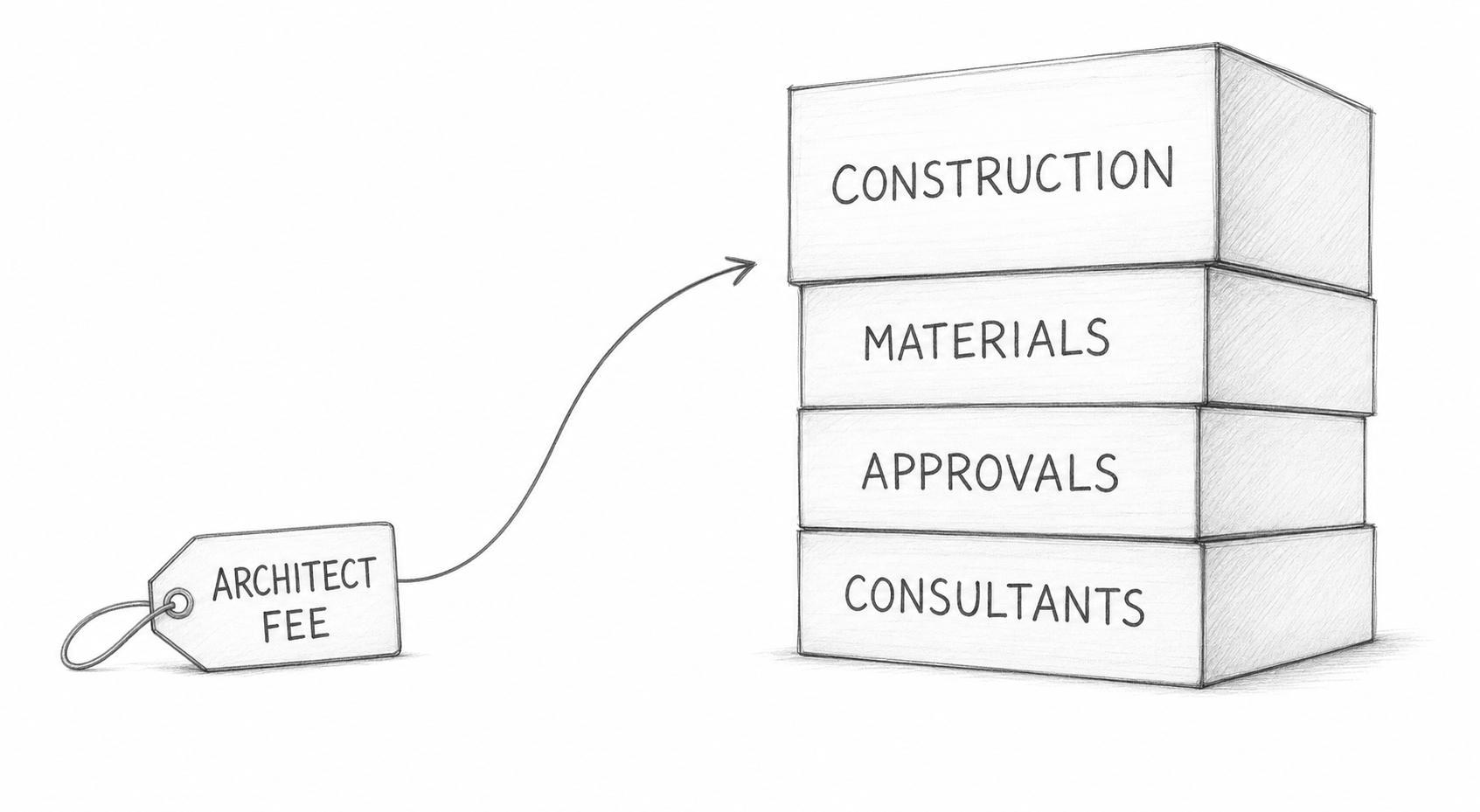
But the architect's fee is a small fraction of the total investment in a custom home project. A few percentage points of difference between proposals is almost always dwarfed by the financial consequences of poor documentation, unrepresented construction phase, or a design that never truly reflected your purpose.
The right architect isn't the cheapest one. The right architect is the one who uncovers what your project is really for, produces drawings that protect your budget during construction, and stays in your corner until the work is done.
That's what purposeful architecture looks like in practice. And we'd be glad to show you what it looks like for your project.
If you're ready to have a real conversation, schedule your free Discovery Call with Scott at Utilitas Architecture. We start where it matters most: with your why.