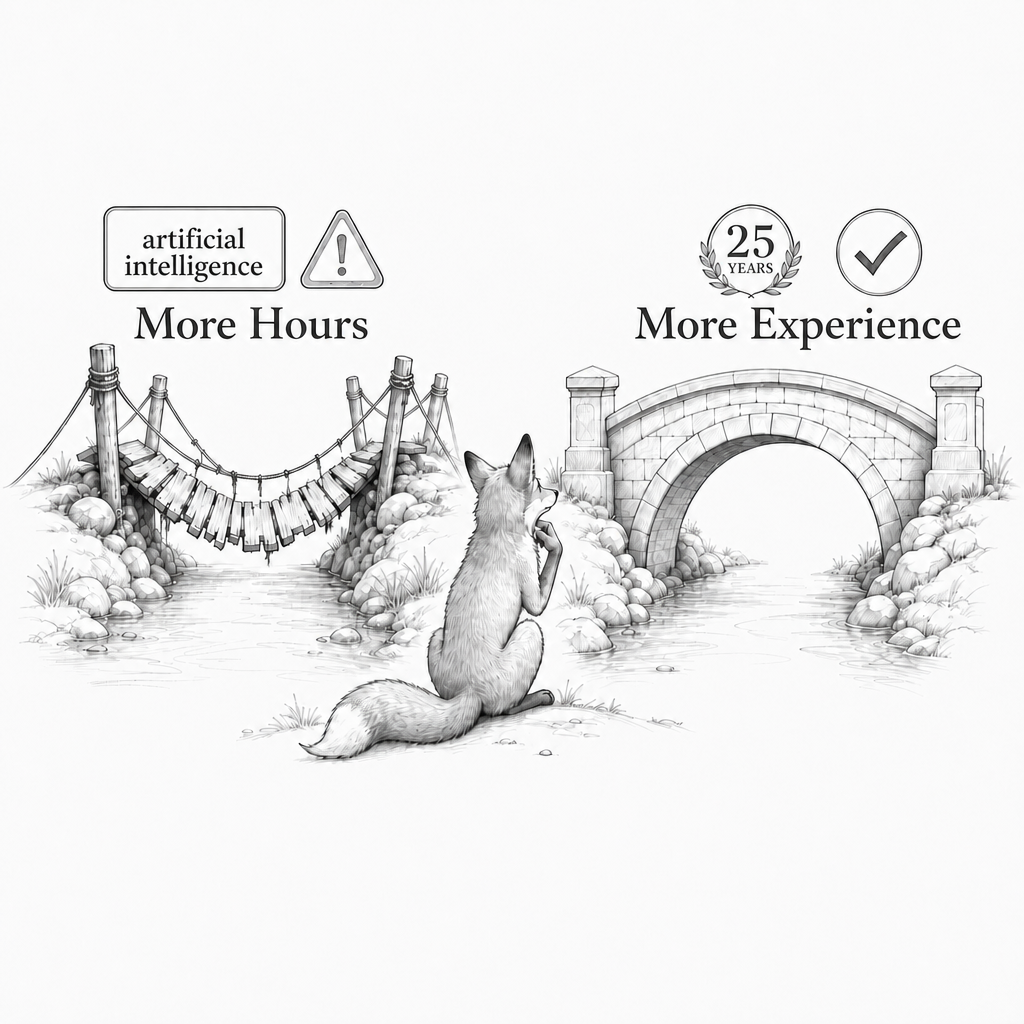
You’re Not Paying for Hours. You’re Paying for Better Decisions.
You're Not Paying for Hours. You're Paying for Better Decisions.
A fee is not a rate. It is a result.
Most people, when they think about what an architect charges, think about time. Hours at a desk. Meetings attended. Drawings produced. That framing is understandable. It is also why so many clients struggle to understand the value of what they are actually hiring.
The work is not in the hours, the work is in the decisions.
What a Custom Home Actually Requires
A home at this level involves thousands of individual choices. Site orientation. Structural systems. How rooms connect to each other. The way light moves through the house at different times of day, and how it interplays with the primary activity of each room. Which materials perform well in this climate, and which ones look beautiful for eighteen months and then become a problem.
Every one of those decisions compounds. A room positioned slightly wrong creates a structural condition on the floor above it. A window placed for a view sacrifices the wall space the living room needed, a material selected for its appearance reveals its maintenance burden in year two.
These are not catastrophic failures. They are subtle ones. And subtle failures in a home are the hardest kind to fix, because you only feel their full weight once the house is complete.
The Real Cost of Getting It Wrong
The financial cost of poor decisions is real. Budget overruns, unexpected corrections, scope that expands without a clear reason. These are common enough that most clients have heard the stories.
But the more significant cost is harder to quantify. It is the home that is uncomfortable. The house that looks good from the outside and feels slightly off from the inside. The layout that seemed logical on paper but disrupts the way your family actually moves through a day. The choices made to impress rather than to serve the life being lived within them.
How do you explain that to yourself, three years in? That a home you built from scratch, at considerable time and expense, does not quite fit who you are.
A custom home gone slightly wrong rarely comes from one dramatic mistake. It comes from a collection of small misalignments, accumulated quietly over the course of a project, that no one caught early because no one was looking for them at the right time.
What Experienced Judgment Actually Buys
An architect who has delivered homes at this scale brings something that cannot be assigned an hourly rate. It is pattern recognition. It is the ability to see a decision not in isolation, but within the full system of the home. It is understanding what a client means when they say they want something "open," and knowing that open means something different for a family with young children than for a couple who entertains regularly.
That kind of accuracy at the front of a project is worth significantly more than correction at the back of it.
Schedule adherence. Budget adherence. A design that reflects how you actually live. These are not the features of a well-managed project. They are the result of decisions made correctly, before construction begins, before they become expensive or time consuming to undo.
Good decisions early are leverage, poor decisions early are debt.
The Relationship That Makes This Work
There is a natural structure to a successful architect-client relationship. The client brings purpose. The architect brings execution.
The client knows what they want their life to feel like. The architect knows how to design for it.
When those roles are clear, the project moves. Decisions get made at the right moments, by the right people, with the right information. The process has direction, and that direction reduces complexity rather than adding to it.
When those roles blur, things slow down. Not because anyone is doing anything wrong, but because a custom home is genuinely complex; and complexity without a clear guide becomes a weight that every decision has to carry.
The clients who get the most from a project at this level are the ones who want an expert to lead. They trust that their purpose has been heard and that the execution is in capable hands. That trust is not blind. It is the product of clear communication at the start and a process that is transparent throughout.
The Decisions That Matter Most Happen First
Before construction begins, before materials are selected, before permits are submitted. The earliest conversations in a project shape everything that follows.
This is where feasibility gets established. Where the program of the home, what it needs to do and how, gets defined clearly enough that the design process has a real foundation to build from.
Getting this stage right does not eliminate complexity. It sequences it. It gives weight to the decisions that deserve it and keeps the smaller ones from becoming larger than they need to be.
If you are thinking about what a project like this involves and want to understand the process before you are in the midst of it, that is the right conversation to have early. Not to commit to anything, simply to see the landscape clearly before you start building on it.